How to Enable or Disable USB Port in Windows 11
Have you ever encountered blocked USB drive access? We believe the answer will be yes; you must have dealt with many USB drive issues.
This happens because administrators have disabled USB drive detection on your Windows 11. Disabling the USB port in Windows 11 is important to protect your data as anyone can connect an unauthorized USB to your computer and copy your files.
So, it is essential to learn how to enable or disable USB ports in Windows 11 to protect your private data. And this guide will walk you through all the possible ways to enable or disable a USB port on your Windows 11. Let’s get moving.
How to Enable or Disable USB Port in Windows 11 (6 Methods)
USB ports allow you to connect your pen drive or USB drive to your PC to transfer data in minutes. It is the best offline method to exchange files and folders.
But unfortunately, it can be risky too. If anyone gets unauthorized access to your computer, they can easily steal your data using the USB drive.
Therefore, administrators have to disable the USB port so that only authorized users can connect USB drives to your Windows 11. So, let’s see how you can enable or disable USB ports in Windows 11:
Method 1. Use the Registry Editor
If you are a pro-Windows user, go to the Registry Editor to enable or disable USB ports in Windows 11. Here the key point is a pro user. If you haven’t ever tweaked registry settings, don’t follow this method, as you might end up corrupting your entire system.
Even if you are comfortable with the registry settings, ensure that you create the registry data backup. It is a precautionary step in case you lose any data during the process.
Follow these steps to disable the USB ports using the Registry Editor:
Step 1. Press the Windows + R keys on your keyboard to open the Run command box.
Step 2. Type regedit in the Run command window and hit Enter to open the Registry Editor window.
Step 3. Follow this path in the Registry Editor address bar and press the Enter button.
HKEY_LOCAL_MACHINE\SYSTEM\CurrentControlSet\Services\USBSTOR
Step 4. After that, go to the right side of the window and double-click on the DWORD Value — Start.
Step 5. Go to the Edit DWORD (32-bit) Value dialogue box and change the Value Data field to 4.
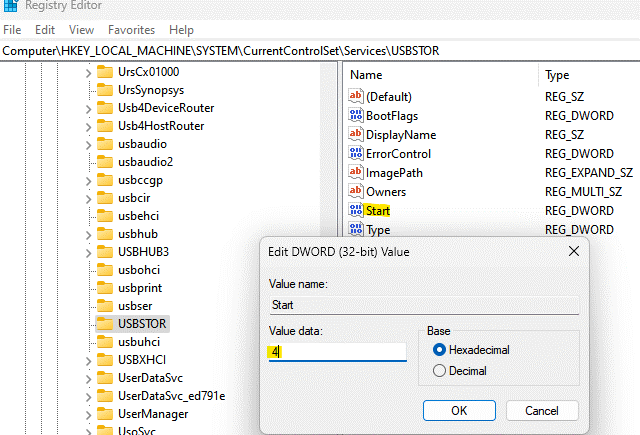
Step 6. Press OK to save the changes. Close the Registry Editor window and restart your computer to check if the USB port access is disabled.
Now, to enable the USB port using the Registry Editor, go to:
Step 1. Open the Run dialogue box and search for regedit.
Step 2. After that, enter this path again in the Registry Editor.
HKEY_LOCAL_MACHINE\SYSTEM\CurrentControlSet\Services\USBSTOR
Step 3. Now, go to the Edit DWORD (32-bit) Value dialogue box and change the Value Data field from 4 to 3.
Method 2. Use the Group Policy Editor
Not everyone has access to the Local Group Policy Editor on Windows systems. However, if you are fortunate enough to have access to the same, you can make a group editor enable or disable USB ports on your Windows 11 computer. To do so, follow these steps:
Step 1. Go to Start, right-click on it and launch the Run command box.
Step 2. Type gpedit. msc and hit OK to launch the Local Group Policy Editor.
Step 3. On the new window, double-click to expand the Administrative Templates option from the left pane.
Step 4. After that, double-click to expand the System option.
Step 5. Next, go to the right side of the pane, scroll down and look for Removable Storage Access settings. And double-click on it.
Step 6. After that, scroll down and look for Removable Disks: Deny execute access. Double-click to open the settings.
Step 7. On the Removable Disks: Deny execute access window; select the radio button to enable or disable the execute access for removable disks.
Step 8. Press Apply > OK to save the changes and move back to the Removable Storage Access window.
Step 9. Follow Steps 6 and 7 for Removable Disks: Deny read access and Removable Disks: Deny write access to enable or disable both settings.
Method 3. Use Device Manager
Device Manager also enables you to disable the USB ports on your computer. Here’s how you can disable or enable your USB port using Device Manager:
Step 1. Go to the Start menu, right-click on it and choose Device Manager from the context menu.
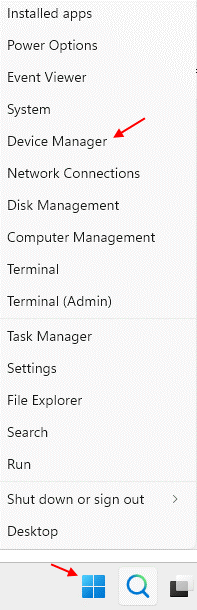
Step 2. On the Device Manager window, go to the Universal Serial Bus controller section and expand it. Look for all the available USB ports, right-click on them all and select Disable.
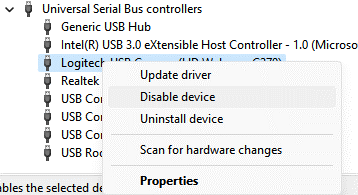
Step 3. Under the System devices section, also look for the USB ports and disable them all. Similarly, enable the USB ports by clicking on the Enable after right-clicking on the USB ports.
Method 4. Uninstall USB Mass Storage Drivers
If you are worried about system security, you can even uninstall the USB Mass Storage Drivers. This way, you can disable all USB ports at once. Here’s how to do it:
Step 1. Press the Windows + R keys to launch the Run command box.
Step 2. Type devmgmt.msc in the search field and hit Enter to open the Device Manager window.
Step 3. Go to the Universal Serial Bus controllers section and expand the menu.
Step 4. Look for the USB Mass Storage Device option, right-click and select Uninstall. Now, all the USB ports are disabled on your computer.
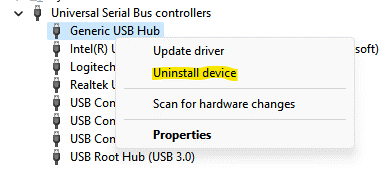
Now, to reinstall the USB ports, connect a USB drive to your PC, and your system will automatically start looking for drivers. Once the system doesn’t find any drivers, it will automatically prompt you to install them. Just follow the on-screen instructions to finish the installation.
You can also use third-party driver installers like Driver Easy to install the accurate drivers on your system.
Method 5. Enable Specific USB Devices
From the group policy, it is possible to allow only specific USB devices to connect to your computer. Just go to Computer Configuration > Administrative Templates > System > Device Installation> Device Installation Restrictions > Allow Installation of devices that match any of these Device IDs.
To find your authorized Device IDs, follow this path: Device Manager > Properties > Details tab > Device Instance Path.
Method 6. Use a Third-party Tool
You can always download a USB drive disabler or enabler on your computer to automatically enable or disable the USB ports. Many great and free USB drive managers are available, such as IntelliAdmin.
Parting Notes
The USB ports are essential for transferring data on your computer without the internet. But if security is your main concern, you can easily disable the USB ports.
Plus, it is super simple to enable the USB ports in Windows 11 anytime. So, let’s disable USB ports and enhance your device’s security now.
Oh, and don’t forget to check other posts on this website for more information on Windows 11.

Author Bio:
Dinesh Lakhwani, the entrepreneurial brain behind “TechCommuters,” achieved big things in the tech world. He started the company to make smart and user-friendly tech solutions. Thanks to his sharp thinking, focus on quality and the motto of never giving up, TechCommuters became a top player in the industry. His commitment to excellence has propelled the company to a leading position in the industry.
Popular Post
Recent Post

BleachBit PC Cleaner Tool: Complete Review After Running Tests
A PC never stays clean on its own. Every app you open, every website you visit, and every file you download leaves something behind. Weeks turn into months, and suddenly your storage feels tight, and your PC feels slower, with no clear reason why. The usual fix is a cleaning tool. But the market is […]

Iolo System Mechanic Review: Full Breakdown and Honest Take
Iolo System Mechanic is designed for users who want their PC to feel fresh and responsive again. With just a few clicks, it digs into the system, clears out unnecessary clutter, and delivers noticeable speed improvements. The interface is straightforward and beginner‑friendly, making it easy to navigate without confusion. But this tool goes beyond simple […]

Clean Master for PC Tested: A Full Breakdown of Its Tools
A computer doesn’t slow down overnight. Right? It happens bit by bit. Extra downloads, leftover cache, startup apps piling up. Soon the fast machine you loved feels sluggish. Boot times drag, programs freeze, and even opening a browser tab feels heavy. This slow decline is common, caused by junk files, cluttered registries, and hidden tasks […]
How To Clean Your PC/Laptop: Guide for Beginners to Experts
A computer never announces that it needs help. Well, yes! It just gets slower, hotter, and noisier, one day at a time, until you finally stop and wonder what changed. Nothing changed overnight. What happened is dust and clutter, working quietly in the background for months. Dust settles inside fans and vents, trapping heat and […]

Wise Care 365 PC Cleaner Tool: A Hands-On Review
Every Windows user knows the feeling. Your computer runs fast on day one. Then months pass. Files pile up. The registry gets messy. Startup takes longer. Apps freeze more often. This slow decline is normal, but it is also annoying. Most people just live with it. Some restart their PC often, hoping it helps. It […]

Glary Utilities PC Cleaner: Complete Review [Tested and Trusted]
Glary Utilities is one of the most popular PC optimization tools available today. It combines cleaning, repair, and performance‑boosting features into a single suite. The goal is simple: keep your computer running fast and stable without needing multiple separate programs. In this review, we’ll look at how Glary Utilities performs in real use, what features […]
Microsoft PC Manager: Complete In-Depth Review
A slow computer can ruin your whole day. Files pile up. Startup apps multiply. Before you know it, your once fast machine feels sluggish and tired. Most people search for a fix, but many tools out there are bloated, pushy, or full of ads. Microsoft PC Manager was built to solve this exact problem. It […]

AVG TuneUp Guide: Features, Pros, Cons, and Pricing
PC performance often drops with time. Junk files build up. Startup programs increase. Storage fills up. As a result, your computer may take longer to boot, feel sluggish, or run out of space. The good news is that these problems are usually easy to fix. AVG TuneUp is a PC optimization tool for Windows. It […]

Ashampoo WinOptimizer: Features and Process [Complete Guide]
Ashampoo WinOptimizer is built for users who want a faster, cleaner, and safer PC. In this review, I’ll walk through its features and how the optimization process works. The software promises one‑click fixes, smart automation, and tools that go beyond basic cleanup. The PC cleaning and optimization tool covers performance tuning, privacy protection, and system […]
Top 10 PC Cleaning and Optimization Tools For Windows 11/10 [2026]
Discover the best PC cleaning and optimization tools for Windows 11 and 10. Remove junk files, improve speed, and keep your PC healthy with trusted cleaners.
