How to Disable Fast Startup on Windows 10?
Windows 10 users get to use a lot of features aiming to improve user experience with different computer-based functions. The Fast Startup feature is an upgrade from the Windows 8 Fast Boot function. The new version assures a speedier boot-up process but is slightly complex.
Users sometimes find functional defects in the Fast Startup process, which is why it is necessary to disable Fast Startup on Windows 10 when using a new device. In this post, learn how to deactivate this feature with a detailed step-by-step breakdown.
What is the Fast Startup function in Windows 10?
Before learning the steps to disable Fast Startup, knowing what the feature is useful for is necessary. This default Windows 10 feature allows the PC to start up after the shutdown phase, similar to the hibernation mode.
While the PC is in the shutdown stage, the operating system stores some system information on the disk. Upon switching the computer on, the Windows operating system resumes functionality through the saved system data in the disk instead of restarting the computer fully.
Therefore, the startup time of the system is faster.
Why Deactivate Fast Startup in Windows 10?
For specific reasons, users have to disable Fast Boot Windows 10, more commonly known as “Fast Startup” in the latest version.
- Allow Windows update installation– The Fast Startup feature can block the steady installation process for new Windows updates. This is because updating a system needs a full OS shutdown to activate. However, during the Fast Startup function, the PC hibernates somewhat. Therefore, the update cannot occur.
- Allow BIOS/UEFI Settings Access- In some cases, users need to disable Fast Boot Windows 10 or the Fast Startup feature since keeping it active blocks the BIOS/UEFI functioning. So, you need to deactivate this feature to enter the BIOS and make your chances as you need.
- Manage encrypted disk images better– In case managing the encrypted disk images is proving difficult, you should deactivate this feature on the PC.
- Dual PC boot up– Some users operate the dual booting function for the PC. To access the available Windows drive on one section while operating on the second, turning on Fast Startup is necessary first.
Sometimes, like checking and updating Windows updates, you can use third-party software like IoBit Software Updater. You should still know how to disable the Fast Startup function when needed. Later, it is possible to reactivate the feature on Windows 10.
Process of Deactivating Fast Startup Feature on Windows
The Fast Startup feature is a default setting in the Windows 10 settings. So, users have to manually configure some settings to disable Fast Startup, albeit with few steps. Besides the procedure for disabling this feature, you should also know how to force-stop it if needed.
Situation 1: Deactivate the Fast Startup Features on Windows 10
After testing out the Fast Startup process directly to see how it works, you will know the right steps for the disabling process from first-hand experience. Here is the main breakdown of the deactivation process.
How to do this?
Step 1: Click the Windows icon on the main toolbar and choose the Search button.
Step 2: Then, search for the Control Panel option in the text field and hit Enter.
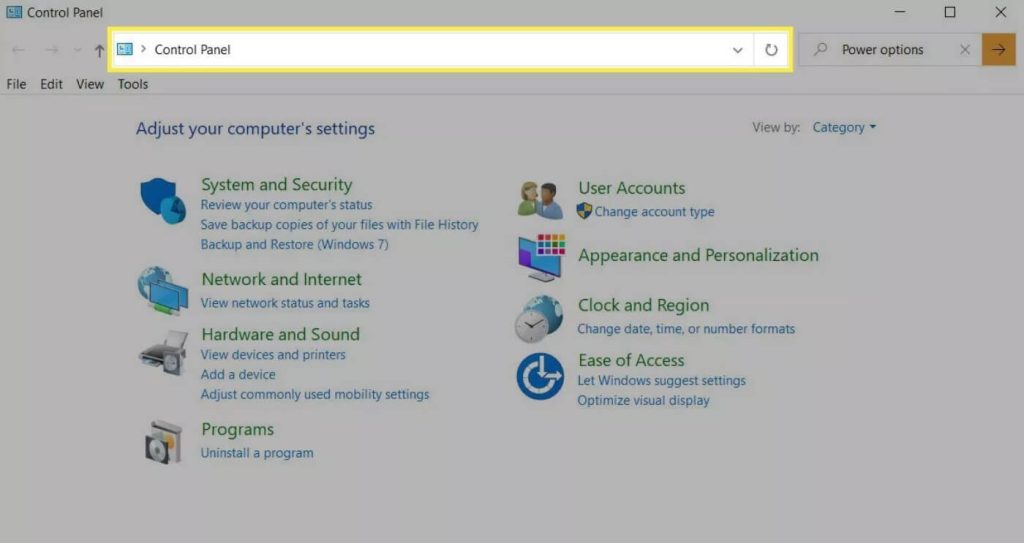
Step 3: Then, under the Control Panel window, search for Power Options and click on it.
To avoid the previous steps, you can use the shortcut process of right-clicking on the Start menu and selecting Power Options.
Step 4: On the next page, choose the option under the aforementioned Power Options category asking you to set the function of the power buttons.
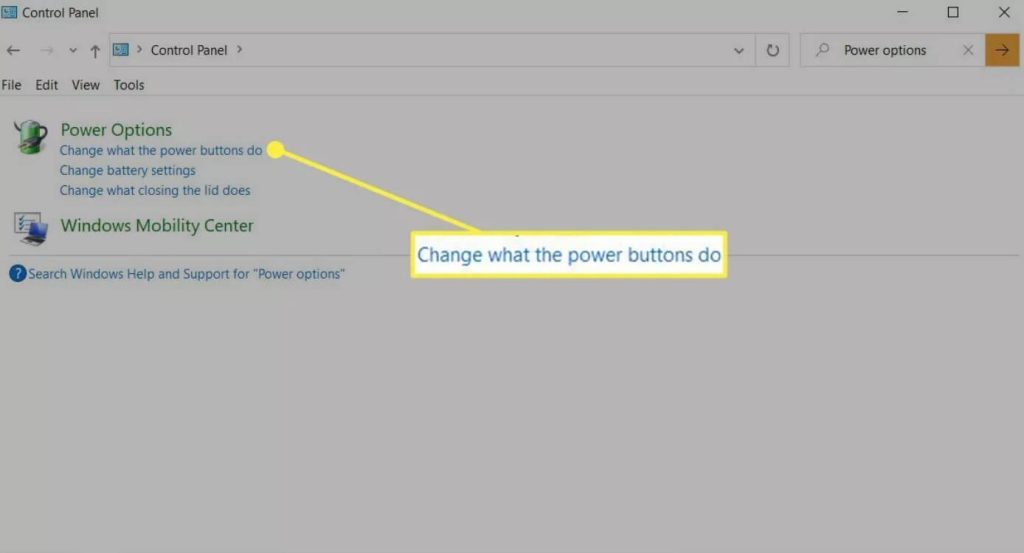
Step 5: Click the link mentioning “Change settings…” on the next page.
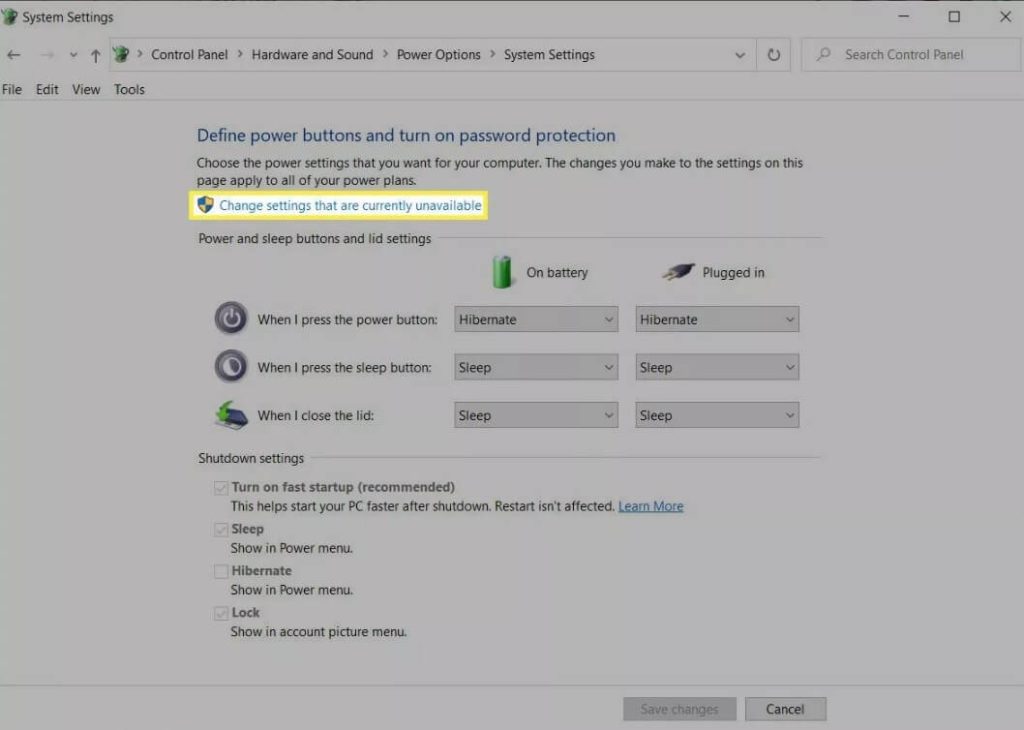
Step 6: Scroll down to the Shutdown Settings category on this same page, you must click on the tickbox beside “Turn on Fast Startup (recommended)” to disable Fast Startup.
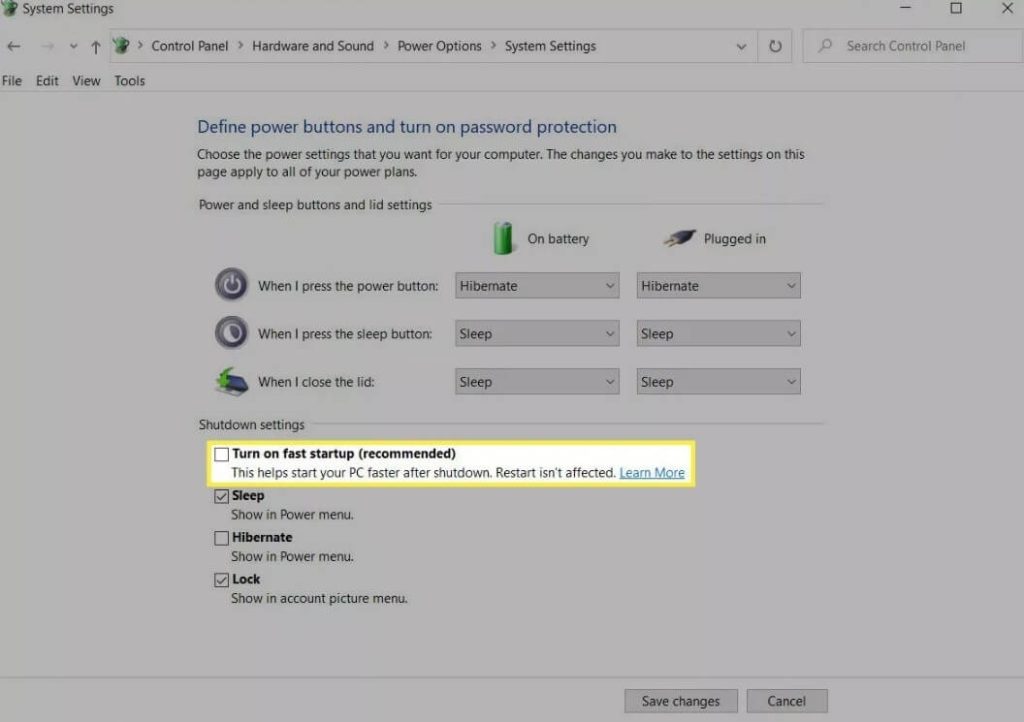
Step 7: Tap the Save Changes option on the screen.
Step 8: Leave the Power Options section to check if the Fast Startup function is still working. For this, shut the PC off and reboot it.
Situation 2: Re-Enable Fast Startup on Windows 10
After deactivating the Fast Startup feature, you can activate it again on your PC anytime. The process does not cause any functional defect in devices if you follow along correctly. Also, keep in mind that the process of enabling and disabling this Fast Startup feature is not that different. Users have to access the Power Options section.
The steps to reach the Power Options window can differ depending on your preferred route or the computer model. Try out all of the sequences mentioned here to know which method of opening this section works best for you.
How to proceed?
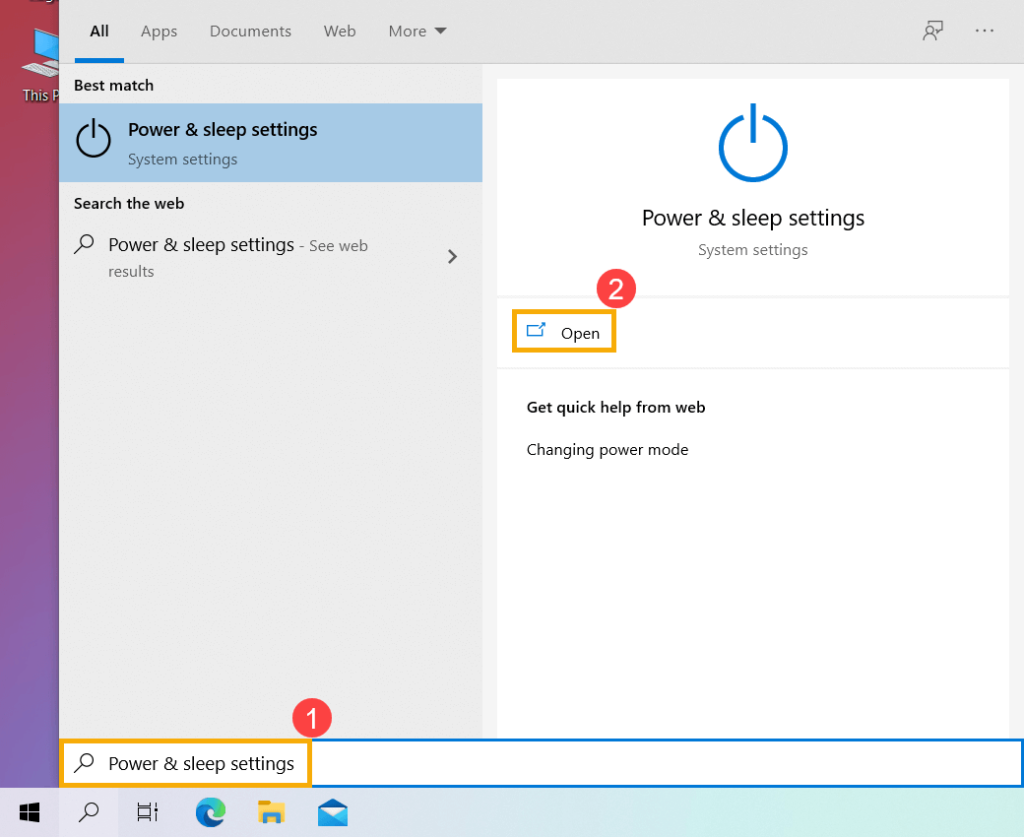
Step 1: Click on the Search button with the Windows icon and search for Power & Sleep settings > Open.
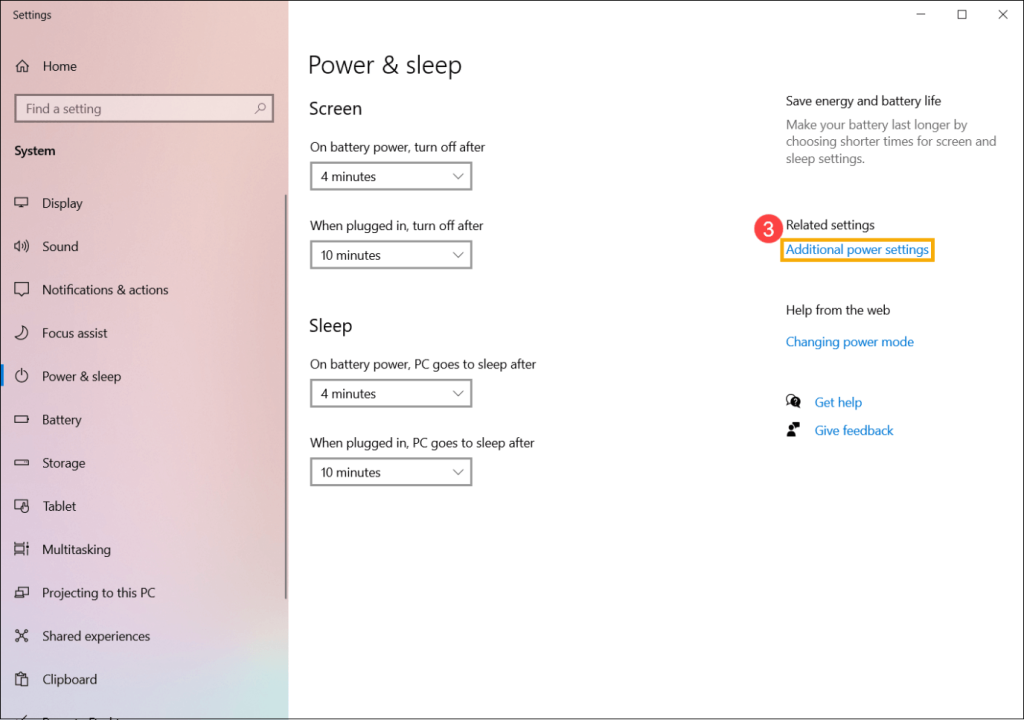
Step 2: Next, tap on the Additional Power Settings option.
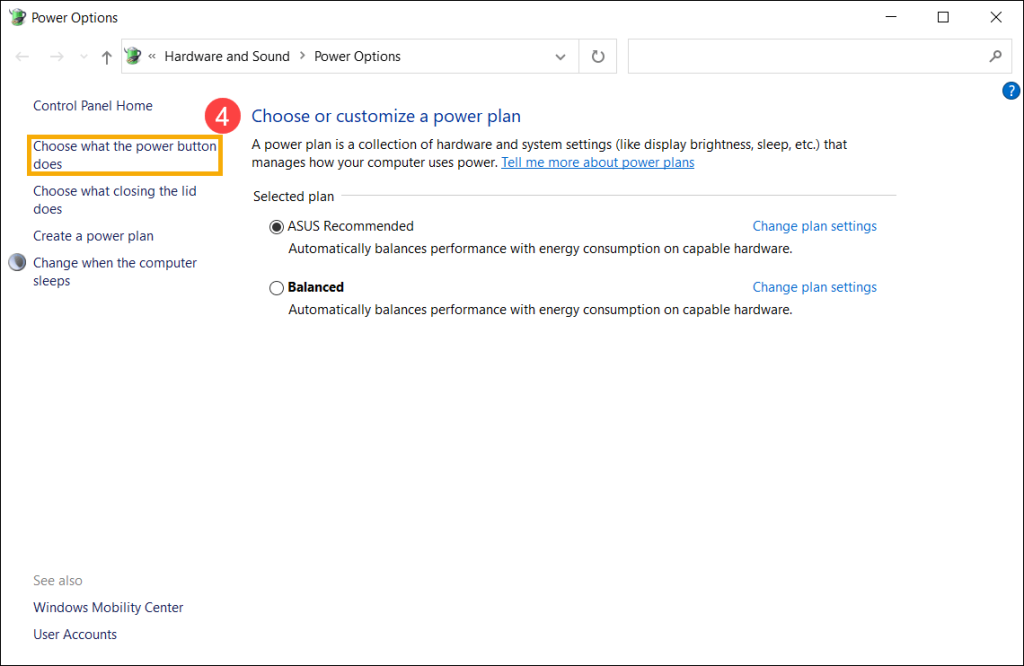
Step 3: In the next window, tap on the hyperlinked option that asks the user to select the function of the power button.
Step 4: Next, choose the hyperlinked option that mentions changing the settings unavailable currently.
Step 5: Tap the option titled “Turn on Fast Startup”, click the tick mark beside it, and then press the Save Changes button.
Situation 3: How to Force-Stop Fast Startup on Windows 10?
In some cases, like a defective system functioning process, you must forcefully turn the feature down. Knowing the steps for this should also help you.
How to do this?
Step 1: Click on your Windows button in the Toolbar.
Step 2: Choose the Shut Down option and press the Shift key simultaneously. This causes the Windows OS to go through a hard system shutdown sequence while the Fast Startup function is still active.
Conclusion
The Fast Startup function was created to boost the booting time in a computer, but it does block certain other functions, like the software updating process. You should use the steps to disable the Fast Startup method, as mentioned, and enable it later if needed. Of course, you should practice the steps a few times to get familiar with the sequence over time.

Author Bio:
Dinesh Lakhwani, the entrepreneurial brain behind “TechCommuters,” achieved big things in the tech world. He started the company to make smart and user-friendly tech solutions. Thanks to his sharp thinking, focus on quality and the motto of never giving up, TechCommuters became a top player in the industry. His commitment to excellence has propelled the company to a leading position in the industry.
Popular Post
Recent Post
BleachBit PC Cleaner Tool: Complete Review After Running Tests
A PC never stays clean on its own. Every app you open, every website you visit, and every file you download leaves something behind. Weeks turn into months, and suddenly your storage feels tight, and your PC feels slower, with no clear reason why. The usual fix is a cleaning tool. But the market is […]

Iolo System Mechanic Review: Full Breakdown and Honest Take
Iolo System Mechanic is designed for users who want their PC to feel fresh and responsive again. With just a few clicks, it digs into the system, clears out unnecessary clutter, and delivers noticeable speed improvements. The interface is straightforward and beginner‑friendly, making it easy to navigate without confusion. But this tool goes beyond simple […]
Clean Master for PC Tested: A Full Breakdown of Its Tools
A computer doesn’t slow down overnight. Right? It happens bit by bit. Extra downloads, leftover cache, startup apps piling up. Soon the fast machine you loved feels sluggish. Boot times drag, programs freeze, and even opening a browser tab feels heavy. This slow decline is common, caused by junk files, cluttered registries, and hidden tasks […]
How To Clean Your PC/Laptop: Guide for Beginners to Experts
A computer never announces that it needs help. Well, yes! It just gets slower, hotter, and noisier, one day at a time, until you finally stop and wonder what changed. Nothing changed overnight. What happened is dust and clutter, working quietly in the background for months. Dust settles inside fans and vents, trapping heat and […]
Wise Care 365 PC Cleaner Tool: A Hands-On Review
Every Windows user knows the feeling. Your computer runs fast on day one. Then months pass. Files pile up. The registry gets messy. Startup takes longer. Apps freeze more often. This slow decline is normal, but it is also annoying. Most people just live with it. Some restart their PC often, hoping it helps. It […]
Glary Utilities PC Cleaner: Complete Review [Tested and Trusted]
Glary Utilities is one of the most popular PC optimization tools available today. It combines cleaning, repair, and performance‑boosting features into a single suite. The goal is simple: keep your computer running fast and stable without needing multiple separate programs. In this review, we’ll look at how Glary Utilities performs in real use, what features […]
Microsoft PC Manager: Complete In-Depth Review
A slow computer can ruin your whole day. Files pile up. Startup apps multiply. Before you know it, your once fast machine feels sluggish and tired. Most people search for a fix, but many tools out there are bloated, pushy, or full of ads. Microsoft PC Manager was built to solve this exact problem. It […]
AVG TuneUp Guide: Features, Pros, Cons, and Pricing
PC performance often drops with time. Junk files build up. Startup programs increase. Storage fills up. As a result, your computer may take longer to boot, feel sluggish, or run out of space. The good news is that these problems are usually easy to fix. AVG TuneUp is a PC optimization tool for Windows. It […]

Ashampoo WinOptimizer: Features and Process [Complete Guide]
Ashampoo WinOptimizer is built for users who want a faster, cleaner, and safer PC. In this review, I’ll walk through its features and how the optimization process works. The software promises one‑click fixes, smart automation, and tools that go beyond basic cleanup. The PC cleaning and optimization tool covers performance tuning, privacy protection, and system […]
Top 10 PC Cleaning and Optimization Tools For Windows 11/10 [2026]
Discover the best PC cleaning and optimization tools for Windows 11 and 10. Remove junk files, improve speed, and keep your PC healthy with trusted cleaners.
