How to disable feedback notifications on Windows 10 and 11?
Windows 10 and 11 are Microsoft’s highly optimized versions of this operating system. Loaded with different features, making it a perfect operating system for many personal and professional uses, Windows 10 and 11 aim to facilitate the user experience. However, users may soon get irritated with the annoying feedback notifications.
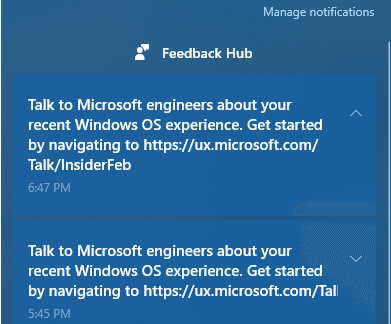
Microsoft asks for feedback, suggestions, bug reports, etc., through the Feedback Hub application on Windows 10 and 11. Users working on a crucial project may not want the feedback notification to open accidentally. Hence, the best way out is to disable system feedback notifications on Windows 10 and 11.
Why disable feedback notifications on Windows 10 and 11?
Microsoft takes every possible step to gather feedback from existing users and use it to improve its products and services. However, the feedback notifications on Windows 10 and 11 may soon get irritating due to high frequency and disruption.
Disabling these notifications doesn’t impact the quality of work or operational efficiency. Windows 10 and 11 users can enable or disable these feedback notifications on their system according to their needs. Hence, many users resort to disabling the feedback notifications to get rid of irritating popups.
Methods to disable feedback notifications on Windows 10 and 11:
The top four methods to get rid of the consistent feedback notifications on Windows 10 and 11 are:
- Using the group policy editor
The quick steps for using the group policy editor to disable feedback notifications on Windows 10 and 11 are:
- Open the “Run” command and type “gpedit. msc” in the search box to start the local group policy editor.
- Navigate the following location in the group policy editor window.
- Click on computer configuration then select administrative templates in windows components.
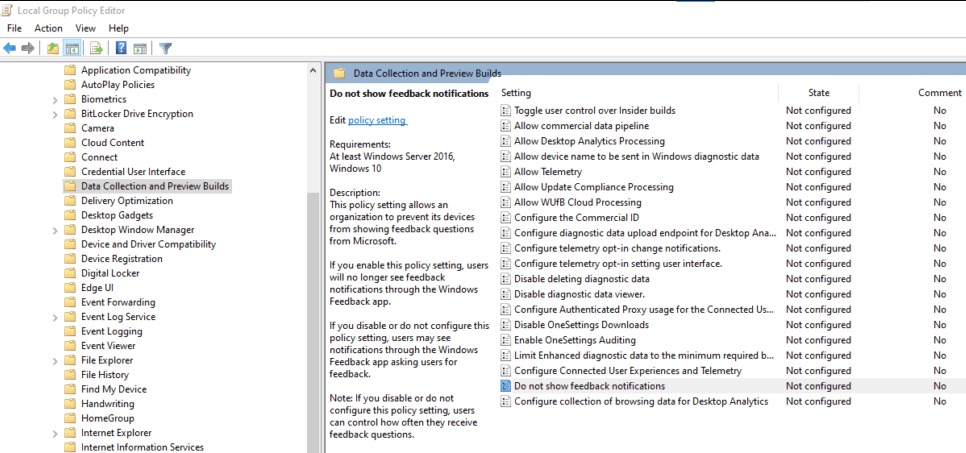
- Select the “Data Collection and Preview Builds” and double-click on the “Do not show feedback notifications” check box.
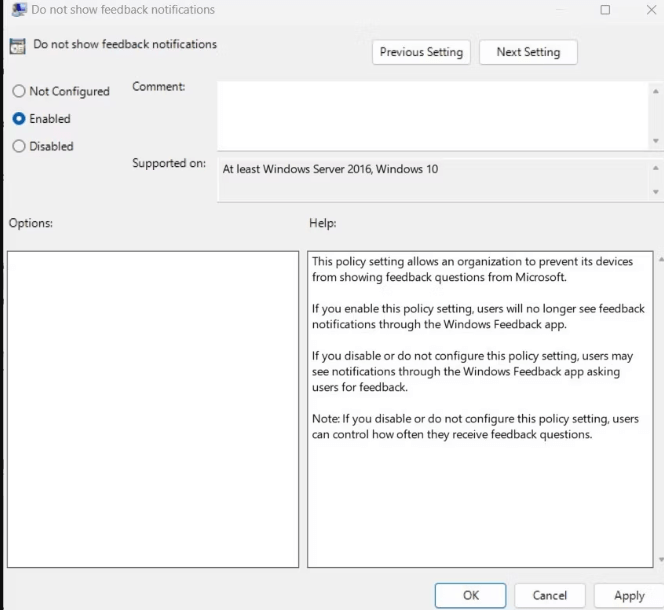
- Select “Enabled” from the dialogue box and press “Apply” and “OK” to save the changes.
- Restart the system to confirm changes.
- Using the registry editor
The details steps for using the registry editor to disable feedback notifications on Windows 10 and 11 are as follows:
- Open the “Run” command and type “regedit,” and click “OK.”
- If the UAC dialogue box appears, select “Yes” to confirm the activity.
- Navigate the following location in the registry editor.

- Create a DataCollection key by right-clicking on Windows and selecting New > Key. Enter “DataCollection” in the filename field and press “Enter.”
- Right-click on the open space in the right side pane and select New > DWORD (32-bit) Value from the context menu.
- Name the DWORD key DoNotShowFeedbackNotifications and click “Enter” to save it.
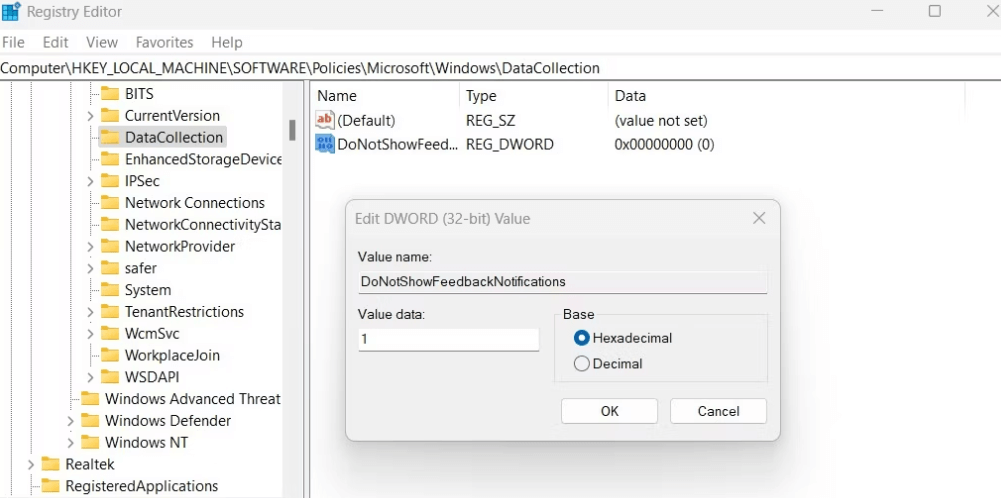
- Save the adjustments in the pop-up window by assigning the value data a value of 1, selecting the base of hexadecimal, and pressing “OK.”
- Restart the computer to confirm the changes.
Using the Windows settings
The process to use Windows settings for disabling feedback notifications on Windows 10 and 11 are:
- Right-click on the “Start” option and select “Settings.”
- Select the “Privacy and Security” option.
- Go to the “Diagnostics and Feedback” option in the Windows permission area.
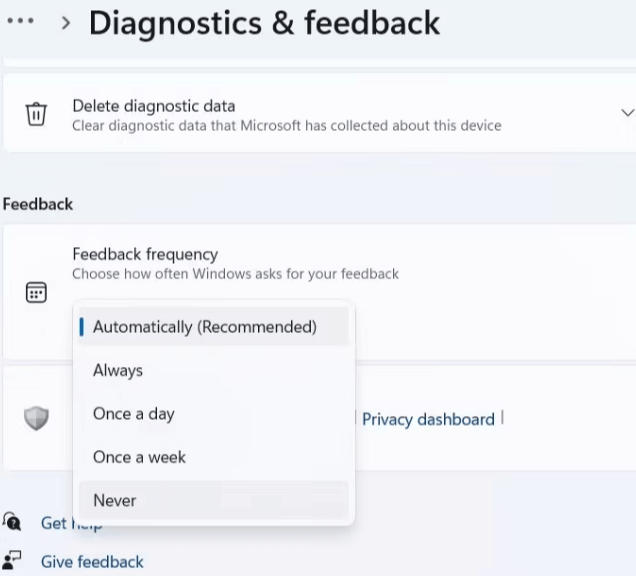
- Navigate to the Feedback section on the next page.
- Select “Never” from the drop-down choice next to the feedback frequency.
- Restart the computer to confirm the changes.
Using the PowerShell tool:
The steps to use the PowerShell tool to disable feedback notifications on Windows 10 and 11 are as follows:
- Click on the “Start” menu and type “PowerShell.”
- Select “Run as Administrator” and click “Yes” if UAC appears on the screen.
- Copy and paste the following command.

- Press enter after typing each one command.
- Restart the computer to confirm the changes.
Wrapping Up:
Hence, it is easy for Windows 10 and 11 users to disable system feedback notifications. The top three methods for the same are the group policy editor, the registry editor, the Windows settings, and using the PowerShell tool. It becomes easy for Windows users to get rid of the feedback notifications from Microsoft without any additional technical knowledge.
Beginners or professionals can use these methods to disable feedback notifications on Windows 10 and 11. It is easy to enjoy a seamless experience while removing the consistent feedback notifications from Microsoft aimed to improve its operating system.

Author Bio:
Dinesh Lakhwani, the entrepreneurial brain behind “TechCommuters,” achieved big things in the tech world. He started the company to make smart and user-friendly tech solutions. Thanks to his sharp thinking, focus on quality and the motto of never giving up, TechCommuters became a top player in the industry. His commitment to excellence has propelled the company to a leading position in the industry.
Popular Post
Recent Post

BleachBit PC Cleaner Tool: Complete Review After Running Tests
A PC never stays clean on its own. Every app you open, every website you visit, and every file you download leaves something behind. Weeks turn into months, and suddenly your storage feels tight, and your PC feels slower, with no clear reason why. The usual fix is a cleaning tool. But the market is […]

Iolo System Mechanic Review: Full Breakdown and Honest Take
Iolo System Mechanic is designed for users who want their PC to feel fresh and responsive again. With just a few clicks, it digs into the system, clears out unnecessary clutter, and delivers noticeable speed improvements. The interface is straightforward and beginner‑friendly, making it easy to navigate without confusion. But this tool goes beyond simple […]

Clean Master for PC Tested: A Full Breakdown of Its Tools
A computer doesn’t slow down overnight. Right? It happens bit by bit. Extra downloads, leftover cache, startup apps piling up. Soon the fast machine you loved feels sluggish. Boot times drag, programs freeze, and even opening a browser tab feels heavy. This slow decline is common, caused by junk files, cluttered registries, and hidden tasks […]
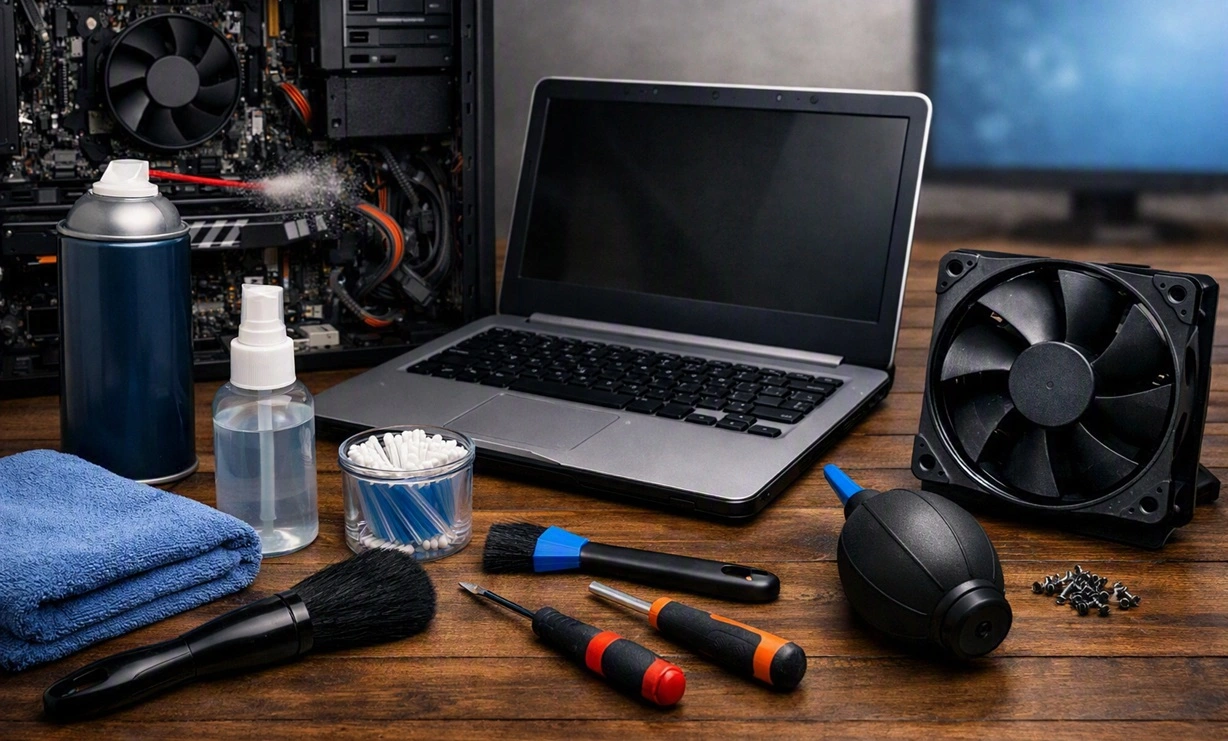
How To Clean Your PC/Laptop: Guide for Beginners to Experts
A computer never announces that it needs help. Well, yes! It just gets slower, hotter, and noisier, one day at a time, until you finally stop and wonder what changed. Nothing changed overnight. What happened is dust and clutter, working quietly in the background for months. Dust settles inside fans and vents, trapping heat and […]

Wise Care 365 PC Cleaner Tool: A Hands-On Review
Every Windows user knows the feeling. Your computer runs fast on day one. Then months pass. Files pile up. The registry gets messy. Startup takes longer. Apps freeze more often. This slow decline is normal, but it is also annoying. Most people just live with it. Some restart their PC often, hoping it helps. It […]
Glary Utilities PC Cleaner: Complete Review [Tested and Trusted]
Glary Utilities is one of the most popular PC optimization tools available today. It combines cleaning, repair, and performance‑boosting features into a single suite. The goal is simple: keep your computer running fast and stable without needing multiple separate programs. In this review, we’ll look at how Glary Utilities performs in real use, what features […]
Microsoft PC Manager: Complete In-Depth Review
A slow computer can ruin your whole day. Files pile up. Startup apps multiply. Before you know it, your once fast machine feels sluggish and tired. Most people search for a fix, but many tools out there are bloated, pushy, or full of ads. Microsoft PC Manager was built to solve this exact problem. It […]

AVG TuneUp Guide: Features, Pros, Cons, and Pricing
PC performance often drops with time. Junk files build up. Startup programs increase. Storage fills up. As a result, your computer may take longer to boot, feel sluggish, or run out of space. The good news is that these problems are usually easy to fix. AVG TuneUp is a PC optimization tool for Windows. It […]

Ashampoo WinOptimizer: Features and Process [Complete Guide]
Ashampoo WinOptimizer is built for users who want a faster, cleaner, and safer PC. In this review, I’ll walk through its features and how the optimization process works. The software promises one‑click fixes, smart automation, and tools that go beyond basic cleanup. The PC cleaning and optimization tool covers performance tuning, privacy protection, and system […]
Top 10 PC Cleaning and Optimization Tools For Windows 11/10 [2026]
Discover the best PC cleaning and optimization tools for Windows 11 and 10. Remove junk files, improve speed, and keep your PC healthy with trusted cleaners.
